The Catholic Sacrament of Anointing of the Sick, formerly known as Last Rites or Extreme Unction, is a ritual of healing appropriate not only for physical but also for mental and spiritual sickness.
One of the effects of original sin is the disintegration of the human body. In other words, due to original sin, we are subject to various maladies of the body, to the deterioration of the body with age, and to the ultimate bodily effect of original sin, death. These effects of sin can be very difficult to bear because of the suffering that usually accompanies them. In addition, along with the loss of bodily capacity can come a fear of death. Finally, temptation also can accompany the disintegration of the body, i.e., we can sometimes feel that God has abandoned us to suffering and to fear. The effects of original sin on the body can be so intense that we feel as Christ felt on the cross, and we cry out, "My God, My God, why hast Thou forsaken Me?" We ask ourselves, "Are we left abandoned at the time of sickness or old age?" In other words, we can doubt Christ's love. However, He does love us since He comes to be with us through the sacrament of Anointing of the Sick. As the Second Vatican Council points out, "As soon as anyone of the faithful begins to be in danger of death from sickness or old age, the fitting time for him to receive this sacrament has certainly already arrived."
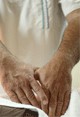
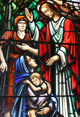
How is Christ present to those in danger of death? As John Paul II writes, "By means of the priest He [Christ] is present ... at the sickbed to which the priest brings the oils of anointing." Through His healing touch, Christ cured many, many people from their physical ailments. In other words, Christ had a genuine compassion (love) for the sick and suffering. In the sacrament of Anointing of the Sick, Christ has given that same compassionate touch to those ordained as priests in the Church. Christ touches the sick and the aged in a sacramental way when the priest anoints them with the oil of the sick on their foreheads and on the palms of their hands while praying, "Through this holy anointing may the Lord in His love and mercy help you with the grace of the Holy Spirit. May the Lord Who frees you from sin save you and raise you up. " The minister of the sacrament of Anointing of the Sick is always a priest (or, obviously, a bishop). The sacrament given to us by Christ is revealed in the rite for Anointing of the Sick: "Through the Apostle James, He [Christ] has commanded us: 'Are there any who are sick among you? Let them send for the priests of the Church, and let the priests pray over them, anointing them with oil in the name of the Lord.' " Further, when Christ sent the Apostles out two by two, they "anointed with oil many that were sick." Clearly, this passage certainly implies the institution of the sacrament of Anointing of the Sick.
By offering His suffering and death to God, Christ satisfied God's love. In the sacrament of Anointing of the Sick, Christ reveals to the old and the ill that through their suffering and death (if death comes), they can love God as Christ did on the cross. In other words, the sacrament "is a sign of definitive conversion to the Lord and of total acceptance of suffering and death as a penance for sins. And in this is accomplished supreme reconciliation with the Father."
The grace given in the sacrament of Anointing of the Sick heals or strengthens us because the sign of the sacrament signifies healing or strengthening. Oil was used in the ancient world for healing or strengthening. When spoken to the sick, the words "help you" and "save you" clearly indicate a healing. The sign of the sacrament of Anointing of the Sick signifies a healing, and it actually causes a healing of the soul from the sickness of sin. Sometimes it does cause a healing of the body.